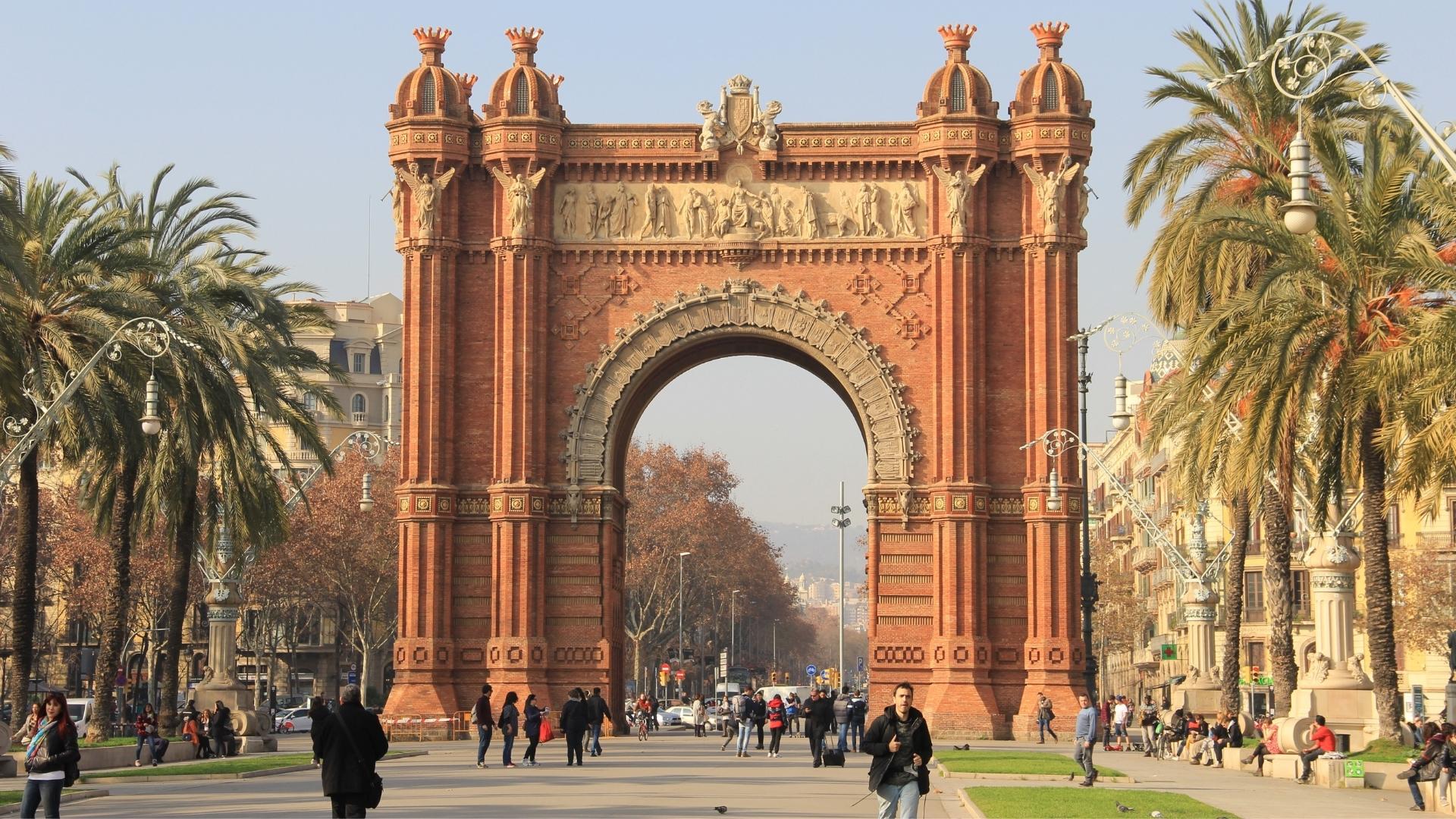
Barcelona offers a distinctive way to study abroad: an international classroom, a city full of creative ideas, and a daily life that can move between a university library, a neighbourhood café and the Mediterranean. It can be an exciting place to develop your knowledge, discover new interests and learn how to feel at home in another country.
Choosing Barcelona also involves practical decisions. The course you want may be taught in English, Spanish, Catalan or a combination. Your campus might be in the city, in Bellaterra or in another nearby town. Housing will probably be one of your largest expenses, and the room you choose can shape both your budget and your daily routine.
This guide helps you put those pieces together, whether you are considering a bachelor’s degree, a master’s, an exchange semester or a shorter learning experience. For country-wide information, see our guide to studying in Spain. For a broader university shortlist, explore 20 universities in Spain for international students.

Is Barcelona the right place for you?
Barcelona is worth considering if you enjoy the energy of a large city and want your education to extend beyond the classroom. Architecture, design, business, technology, languages and cultural life provide plenty of material for curiosity. You might find yourself developing a project with international classmates, discovering a local exhibition or learning something unexpected through a student society.
The city will suit some students better than others. If you want a quiet campus routine, explore the actual setting of your university rather than assuming every Barcelona programme involves city-centre living. If your budget is tight, accommodation needs attention early. If you prefer studying exclusively in English, make the programme’s teaching language one of your first filters.
Imagine a normal Tuesday, rather than a holiday weekend. Where would you wake up? How would you get to class? Where would you study afterwards, buy groceries and meet friends? A course and a city become much easier to compare when you picture the everyday experience.
Universities and English-taught programmes in Barcelona
There are complete English-taught degrees in and around Barcelona, alongside bilingual programmes and individual English modules. The choice is programme-specific. An institution’s international reputation or English-language website does not mean that all its courses are taught in English.
Start with the subject you want to learn, then compare the curriculum, teaching language, campus and practical opportunities. The following institutions offer useful starting points rather than a ranking.
Universitat de Barcelona: a broad academic choice
The University of Barcelona, usually called UB, offers a wide range of subjects. It is a useful place to explore if you are interested in sciences, humanities, social sciences or business and want the breadth of a large university.
Its International Business degree illustrates why the language detail matters. The programme page currently lists 73.6% English and 26.4% other languages, rather than an exclusively English curriculum. It is a four-year degree combining business study with an international and multilingual perspective.
For other subjects, use UB’s degree finder and the relevant faculty information. Locate the buildings where your course is taught before deciding where to live; the university name alone is not a useful commuting destination.
Universitat Autònoma de Barcelona: English study and campus life
UAB is particularly useful to investigate if you want an English-taught undergraduate route. Its English-language degree list includes Business Administration, Economics and Artificial Intelligence, among other options. Language degrees on the same list can include more than one teaching language, so follow the individual course description.
Many students study at Bellaterra, outside Barcelona itself. That creates a different choice of daily life: you can explore campus accommodation and nearby towns, or live in Barcelona and commute. Neither is automatically better. Think about how much time you want to spend on campus, in the city and travelling between them.
UAB’s Vila Universitària accommodation is worth exploring alongside city housing. Room types, contract lengths and included services make a substantial difference to the price.
Universitat Pompeu Fabra: connect your subject with the campus
UPF provides another starting point for English-taught study. Its International Business Economics bachelor’s degree is a four-year English-taught programme based at the Ciutadella campus. This gives business and economics applicants a concrete option to compare with courses at UB and UAB.
At postgraduate level, the Economics and Business department describes English-taught master’s routes offered with Barcelona School of Economics and UPF Barcelona School of Management.
UPF has several campus locations, including Ciutadella, Poblenou and Mar. Choose accommodation around the location of your programme, rather than assuming that all UPF students travel to the same place.
Universitat Politècnica de Catalunya: engineering and applied learning
UPC is a natural place to explore engineering, technology, architecture and related subjects. Its undergraduate catalogue identifies the school responsible for each programme, while the master’s catalogue provides options for more specialised study.
One English-taught undergraduate example is Civil Engineering Technologies at the Barcelona School of Civil Engineering. The curriculum offers a route into understanding infrastructure and the technical challenges of the built environment.
UPC teaching extends beyond Barcelona to locations including Castelldefels and Terrassa. For a practical course, compare the projects and facilities you would use, then work out the housing and transport arrangements around that school.
Business schools and specialist institutions
Barcelona also offers specialist business-school routes. If you are considering management, entrepreneurship, finance, marketing or an MBA, our business schools in Spain guide includes options such as Esade, IESE, EADA and other institutions with Barcelona study opportunities.
Compare the programme that matches your stage of life. A first degree, an early-career master’s and an MBA designed around professional experience serve different purposes. Look at the subjects, teaching approach, class profile and opportunities to apply ideas through projects.
Specialist education can also be attractive for creative and practical interests. A portfolio, studio project or collaborative brief may tell you more about the learning experience than a long list of general institutional claims. Explore examples of student work wherever they are available.
English, Spanish and Catalan: how language affects your experience
Spanish and Catalan are both widely encountered in Barcelona. Catalan is a distinct Romance language, as is Spanish; it is not a form of Spanish. You may see it on signs, hear it among classmates and encounter it in university administration and teaching.
You do not necessarily need Catalan to begin an English-taught degree. The relevant question is which languages your actual programme uses for compulsory subjects, assessments and practical activities. A fully English route, a bilingual degree and a selection of English exchange modules are different arrangements.
If you are coming for a semester, look at the courses offered during that semester and whether you can assemble the credit load you need. If you are taking a full degree, consider the curriculum across all years. The first semester alone may not reflect the later language mix.
Learning the local languages adds to the experience
Even when your academic work is in English, Spanish can help you build friendships, manage everyday tasks and participate more confidently beyond the international student community. Learning some Catalan can also help you connect with the place where you are living.
You do not need to become fluent in everything at once. Begin with useful phrases, join a language exchange and practise through ordinary routines. A weekly conversation group can provide both language practice and a reason to meet the same people regularly.
For a language course, think about the balance between structured teaching and practice outside class. Ask what level you will join, how progress is assessed and how much speaking time the lessons include. The best course is one you can attend consistently alongside your other commitments.
How much does studying in Barcelona cost?
Your total cost combines tuition, housing, everyday spending and the expenses of moving. Two students at the same university can have very different budgets because their fee category, accommodation and lifestyle differ.
Separate these categories before comparing programmes. A lower tuition fee does not necessarily mean a lower overall annual cost, and an expensive residence may include meals or utilities that a cheaper room does not.
Tuition fees: use the price for your course and circumstances
For 2026–27, UB’s published fee information lists €17.69 per credit as the standard official bachelor’s teaching price. At that rate, 60 credits amount to €1,061.40 before other charges. This is an example of the calculation, not a universal annual quote for every international student or Barcelona institution.
The applicable price can depend on the programme, student category and enrolment circumstances. Master’s fees have their own categories, and affiliated centres and private institutions can have different prices. Use the university’s fee assessment for your own situation when making a commitment.
For private programmes, compare the complete annual or programme fee, the payment timetable and what is included. A reservation payment may be part of the tuition rather than an extra charge; the institution should make that clear. Our tuition fees guide explains how to compare costs across destinations.
Housing: recent evidence is more useful than an old average
In September 2026, the Spanish consumer organisation OCU reported an average advertised student-room rent of €735 a month in Barcelona in its analysis of room listings. Its sample was taken on 31 August 2026, and prices varied substantially between neighbourhoods. This is a snapshot of advertised rooms, not a guarantee of what you will pay. See OCU’s housing analysis.
Campus accommodation can look different. For example, UAB’s Vila Universitària lists a single room in a five-person flat at €531.94 per person per month, including utilities for stays shorter than ten months, with that rate applicable from September 2026. Other contract lengths and room types use different prices. This is a specific Bellaterra accommodation option, subject to availability, rather than a Barcelona city average.
Use these examples to understand the range of possibilities, then obtain prices for your intended dates. An old university budget page may be useful for identifying spending categories without reflecting the rooms currently available to you.
An illustrative monthly budget
The following example is a planning exercise for one student sharing accommodation. It is not a quotation or a claim that every student can live on this amount:
- Room: €750.
- Utilities and internet, if not included: €70.
- Groceries and basic household purchases: €280.
- Transport allowance: €30.
- Phone: €15.
- Personal spending and leisure: €120.
- Contingency: €100.
Total: €1,365 a month. Ten months would be €13,650 and twelve months €16,380. Tuition, insurance where needed, travel, housing deposits and arrival purchases are additional. The transport allowance is a budget category; your actual travel pass may cost less or more.
Replace each figure with evidence from your own plans. If rent includes utilities, remove the separate utility allowance. If your residence includes meals, adjust food spending. If your course requires materials or equipment, add them explicitly.
The first month may require more cash than later months because deposits, travel and initial purchases arrive together. A refundable deposit is not necessarily a final expense, but you still need the money available when you move in.
Where to live: begin with the campus
Barcelona neighbourhoods offer different routines, but there is no single best area for every student. A room that works well for someone attending Ciutadella may be inconvenient for a student travelling to Bellaterra or Castelldefels.
Use these areas as starting points for a housing search, then compare individual addresses. Streets, buildings and transport connections vary within each neighbourhood.
Eixample
Eixample is a useful area to investigate if you want a central base with a broad choice of everyday services. It covers a large part of the city, so the nearest station and the direction of your commute matter more than the district name alone.
Compare noise, natural light and whether the bedroom faces a main road or an interior courtyard. A convenient central location can be attractive, but it does not automatically provide the best value for your particular course.
Gràcia
Gràcia may appeal if you like the idea of neighbourhood squares, local cafés and a daily routine with places you return to regularly. It is worth exploring for the experience of living there, rather than assuming it is convenient for every campus.
When assessing a room, map the walk to the relevant station and the full journey to class. Also consider evening noise around the immediate street and the practical features of the flat.
Poblenou and the eastern side of the city
Poblenou is a sensible area to investigate for a programme at UPF’s Poblenou campus or other teaching locations on that side of Barcelona. It may also appeal if you would enjoy having the coast within reach of your everyday routine.
Do not assume every listing described as Poblenou is equally close to your building. Check the exact address and compare the route on foot and by public transport.
Les Corts and the university area around Diagonal
If your faculty is around the western Diagonal university area, include nearby housing in your search. Being able to reach classes easily can be particularly valuable when you have long library days, laboratory sessions or group work.
Compare the actual journey with accommodation elsewhere in Barcelona. A slightly higher rent may be worth considering if it saves substantial time, while a direct transport connection can make a more distant room practical.
Sants and other well-connected areas
Sants is worth investigating if its transport connections match your route. More generally, a room near a useful direct line can be a better fit than a fashionable address requiring several changes.
Look at the services you will use during an ordinary week: groceries, a place to study, laundry facilities and transport home after an evening out. Convenience is personal, and it is often built from these small details.
The old city
The Gothic Quarter, El Born and El Raval offer a central setting, but the experience differs from street to street. When comparing flats, pay attention to noise, stairs, ventilation and natural light, as well as location.
A lively area can be enjoyable for socialising without being the place where you sleep best. If possible, see the street at more than one time of day before choosing a long stay.
Bellaterra and towns outside Barcelona
For UAB, compare city living with Bellaterra campus accommodation and options in nearby towns. UAB’s accommodation information identifies places such as Cerdanyola del Vallès, Sabadell and Sant Cugat as alternatives to consider.
For UPC or another institution with teaching outside the city, the same principle applies: start with the school location. Calculate the full door-to-door journey, including walking, transfers and waiting time. A train journey advertised as short is only one part of the daily commute.
Finding accommodation that suits you
The main choices are a student residence, a room in a shared flat, campus accommodation where available, or a private apartment. The right choice depends on your budget, preferred level of independence and how you want to meet people.
Student residences
A residence can make the social side of arrival easier. You may have shared facilities and organised activities, and some packages include meals or cleaning. Compare the full package with an ordinary room rental rather than looking only at the rent.
Find out whether the room is private or shared, which facilities are included and what contract dates are available. A residence near one campus may be inconvenient for another. Room photographs are only the starting point; the location and daily arrangements matter just as much.
Shared flats
A shared flat can offer more choice over location and household atmosphere. Speak with the people you would live with about cleaning, guests, working hours and use of shared spaces. Similar expectations can make daily life much easier.
Clarify the total monthly payment, deposit, included bills and any limits on utility usage. If you are arriving before classes begin, make sure your accommodation starts when you actually need it.
Useful starting points
Your university’s housing information is a good first stop. The Generalitat’s Study in Catalonia accommodation page also introduces the Barcelona University Center housing service and other accommodation resources.
Before sending money for a private room, establish who is offering it, what space you are renting and the terms of the booking. A viewing or live video visit can help you understand the property. Keep the written agreement and payment record, and avoid being rushed by a claim that you must transfer immediately to secure an unusually cheap room.
If the right long-term option is not yet available, a short initial stay can give you time to view properties. Include that cost in your arrival budget rather than assuming you will find a suitable room on the first day.
Getting around Barcelona
Many student journeys combine walking with metro, bus or rail services. The best ticket depends on your age and the route you use, especially when your campus is outside the city.
At the time of review in October 2026, TMB lists the T-jove at €45.50 for 90 consecutive days for people under 30. It is personal and non-transferable, covers integrated journeys across the Barcelona ATM fare zones and includes the airport metro stations. This is a reduced fare, so use the operator’s page for the price applying when you travel.
For students aged 30 or over, compare the T-usual and other relevant products. TMB’s 2026 fare information lists the one-zone T-usual at €22.80. Your required zones and travel pattern determine whether that example applies.
Read the ticket’s coverage rather than assuming that every airport service or every journey is included. Allow time to arrange the appropriate T-mobilitat support and identity registration where required.
Make the commute part of the housing decision
Test a route for the time you expect to attend class. Check the return journey too, particularly if you have evening activities or a late library session. Transport choices become much clearer when you compare actual addresses.
Walking can be one of the pleasures of living in Barcelona, but the distance that feels enjoyable on a free afternoon may feel different before an early lecture. Leave room in your timetable for the practical rhythm of the city.
Applying for a course
Start by deciding whether you want a full qualification, an exchange semester or a short course. These routes have different applications, and an international office may handle visiting students separately from degree admissions.
Bachelor’s degrees
Your secondary-school qualification and education system affect the route into undergraduate study. Follow the university’s instructions for applicants with your background. Some applicants will need services through UNEDasiss or other qualification-processing steps; the university can explain which route applies.
Build a shortlist around courses you would genuinely enjoy. Compare the compulsory subjects, language, campus and cost before focusing on a single university name. Application deadlines and enrolment dates are separate, so keep both in your planning calendar.
Master’s degrees
For postgraduate study, look at how your previous degree and experience connect with the course. A specialised technical master’s may require particular foundations, while another programme may welcome applicants from several disciplines.
Use a motivation statement to explain your interests and what you hope to develop. Work experience, independent projects, volunteering or a portfolio can add substance to that story where relevant. Ask about final projects and teaching methods so you can picture the actual learning experience.
Exchange semesters and short courses
For an exchange, begin with your home university’s partnerships and the subjects available during the intended semester. Agree how those subjects fit your degree before committing to travel.
A summer school or short course can be a good introduction to Barcelona if a full year abroad is not practical. Compare teaching hours, class level, accommodation and the balance between academic activity and excursions. Choose a programme whose learning content interests you as much as the destination.
Student life: making Barcelona your own
The first weeks can feel exciting and disorienting at the same time. You may be meeting people constantly while still missing familiar routines. Give yourself time to settle rather than expecting every day to look like a study-abroad advertisement.
Join something that meets regularly: a sports session, a language exchange, a society or a creative group. Repeated contact usually gives friendships more room to develop than a succession of one-off events.
Leave time for the city beyond the obvious landmarks. A neighbourhood library, local market, exhibition or public talk can become part of your education. For students of design, business or the social sciences, ordinary observations can also become the starting point for projects and new questions.
A weekly rhythm that leaves room for discovery
Set aside realistic study time, particularly if your course expects substantial independent work. Then make space for activities you enjoy. A simple routine might combine lectures and library sessions with one society meeting, a language exchange and a free afternoon exploring somewhere new.
There is no need to spend heavily to feel involved. Cooking with flatmates, walking with a friend and participating in campus activities can be as memorable as ticketed attractions. Ask about student rates where relevant, while checking the conditions for each venue.
Comfort and everyday wellbeing
When choosing a room, consider whether it will be comfortable for both studying and sleeping. Heating, ventilation, daylight and household noise matter over an academic year. Barcelona’s appeal outdoors does not remove the need for a workable indoor space.
If you need academic adjustments or other support, contact the university early so the arrangements can be discussed before classes begin. International offices and student services can also help you find your way through unfamiliar university routines.
Take normal city precautions with your phone, bag and documents, especially in crowded places. Barcelona’s municipal safety reporting identifies theft as a significant share of recorded offences. Keeping valuables secure is a practical habit rather than a reason to avoid enjoying the city.
Internships, work and experience
Barcelona can provide opportunities to explore professional interests, but the most useful starting point is your course and its support network. Ask how placements are organised, whether they form part of the curriculum and what previous students have done.
Think about the skills you want to practise. A research project, a student venture, a design brief or a placement can each offer a different way to apply your learning. The experience becomes more valuable when you can explain your contribution and what you learned from it.
English may be enough for some opportunities, while Spanish or Catalan can broaden your options. Language requirements depend on the organisation and the work involved. A city’s international profile does not mean that every local employer operates in English.
Paid work also depends on your circumstances and any applicable immigration conditions. Have the funding for essential study and living costs in place before you arrive. A possible job can become useful additional income and experience, but it should not be the only plan for paying the next month’s rent.
Preparazione all'arrivo
Once you have chosen a course, organise the move around the programme’s actual start and enrolment dates. Your nationality, residence circumstances and length of stay determine which immigration arrangements apply. Use your university’s international support service and the Spanish consulate responsible for your place of residence for current instructions.
Our Spain study guide covers the broader visa, living-cost and work questions. For Barcelona itself, a practical arrival sequence is:
- Confirm the course, teaching language, campus and dates.
- Build a full budget and arrange the payments due before arrival.
- Follow the document and immigration process relevant to your circumstances.
- Book accommodation that covers your actual arrival date.
- Plan the journey from your arrival point to the accommodation.
- Attend university orientation and complete enrolment.
- Arrange the transport product that fits your regular commute.
- Join one activity that will help you meet people consistently.
Keep room for things to take longer than expected. Arriving with a few practical arrangements already settled makes it easier to enjoy the unfamiliar parts.
Frequently asked questions about studying in Barcelona
Can I study in Barcelona entirely in English?
Yes, selected full degrees are taught in English. Examples include UPF’s International Business Economics and UAB’s English Business Administration route, with further options at undergraduate and postgraduate level. Look at the specific programme rather than assuming the same language applies throughout a university.
Do I need Catalan before I arrive?
Not necessarily for an English-taught programme. Courses using Catalan or a combination of languages have different requirements. Learning some Catalan can enrich everyday life, while Spanish is also useful for settling in and exploring opportunities beyond your course.
How much money should I budget each month?
Begin with an accommodation offer for your dates, then add food, bills, transport and personal spending. This guide’s illustrative shared-housing budget is €1,365 a month before tuition, insurance and arrival expenses. It is a planning example to adapt, not a minimum or a guaranteed cost.
Should I live in the centre or near my campus?
Compare both using the full door-to-door journey. If your programme is in Bellaterra, Castelldefels or another location outside central Barcelona, nearby accommodation may suit your routine better. If you value city-centre living, decide how much daily commuting you are happy to accept.
Is Barcelona or Madrid better for studying?
The better choice depends on the course, budget and experience you want. Compare specific programmes and actual housing options in each city. Barcelona may appeal for its coastal setting and multilingual daily life, but the academic fit and practical arrangements should lead the decision.
Can a part-time job pay for my studies?
It is better to fund your essential costs in advance. Work availability, language requirements, your timetable and any immigration conditions all affect what is possible. Treat a job as a potential addition to the experience rather than guaranteed funding.
Is a semester enough to benefit from studying in Barcelona?
A semester can provide valuable academic, language and personal experience. Choose subjects that fit your goals and give yourself ways to meet people regularly. A longer stay offers more time to develop those connections, but a shorter programme can still be meaningful.
Reviewed in October 2026. Programme examples, fees and transport prices link to their sources throughout the guide. Prices and course arrangements can change; use the information for your intended intake and travel dates when making bookings.
 Italian
 English
 Arabic
 Chinese
 Danish
 Dutch
 French
 German
 Greek
 Hebrew
 Japanese
 Korean
 Portuguese
 Romanian
 Spanish