


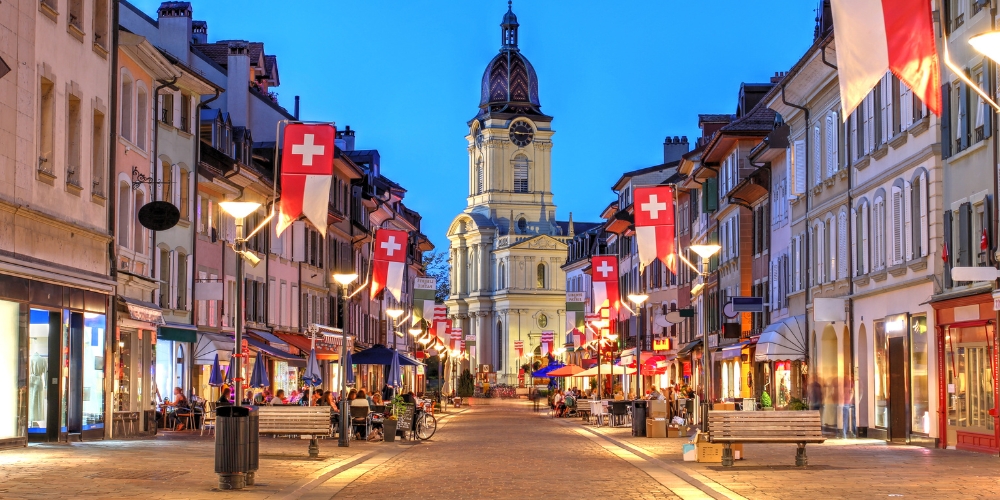
Swiss boarding schools offer very different experiences. An alpine campus with outdoor learning is not the same as a school near Lake Geneva, and a US curriculum is not the same as an IB pathway. The most useful comparison starts with a student’s interests and everyday needs.
Switzerland’s scenery is appealing, but a teenager will spend far more time in lessons, shared rooms and activities than in promotional photographs. Ask what an ordinary week would actually feel like.
Aiglon College
Aiglon places mountain life at the centre of its educational setting. Its Years 10–11 information describes IGCSE and pre-IB routes leading towards the IB Diploma stage. Compare the academic pathway with the outdoor and community experience your child wants, and discuss the timing of entry into a two-year course.
Ecole d’Humanité
Ecole d’Humanité, in Hasliberg, describes progressive residential education with English- and German-language programmes. Its English provision includes a US programme and AP options. This offers a different educational approach from an IB-focused shortlist, particularly for students interested in a community where practical and creative activities sit alongside academic work.
Haut-Lac
Haut-Lac offers full and weekly boarding for ages 11–18, with English-only or English-French educational routes and IB programmes. Its campus information places it in Saint-Légier, near Vevey and Montreux. Ask which subjects, language combination and residential arrangement fit the intended entry year.
Choose the language and curriculum together
Studying in Switzerland does not automatically mean studying in French. Some programmes are mainly English; others are bilingual or German-speaking. Ask how language teaching connects with ordinary life and how newcomers receive support.
Discuss the student’s possible next steps without making their entire school experience revolve around university applications. A good fit should develop knowledge, curiosity, friendships and confidence as well as preparation for further study. For a transfer close to final examinations, compare subjects and assessment arrangements carefully.
Understand the complete annual price
Request the official fee schedule in Swiss francs for the exact age group and academic year. Establish whether tuition and boarding are combined, and add deposits, examinations, insurance, excursions, equipment, specialist lessons and travel. Outdoor programmes may also require clothing or equipment that a family does not already own.
If you earn in another currency, allow room for exchange-rate changes. A scholarship may reduce part of the tuition while leaving residence and other costs payable. Ask for the confirmed amount and renewal conditions before treating support as part of the budget.
Residence life and time away
Check the school calendar, including holiday closures and travel days. Ask who helps with homesickness, how often families communicate with staff and how the school balances organised activity with quiet time. Different students need different amounts of structure and privacy.
Visit the boarding house, not just the campus. Discuss room sharing, evening study, food and ordinary weekends. A student who feels heard during these conversations is better placed to make an informed choice.
Is Switzerland the right setting?
Compare it with other countries using the same criteria: learning, personal support, total cost and travel from home. Prestige alone is a weak reason to choose any school. A teenager’s enthusiasm for the actual community is much more useful.
Esplora boarding schools across Europe, ways to compare affordability e boarding schools in France for alternative settings.
Reviewed 25 October 2026. Follow the official school links for current entry-year details.