


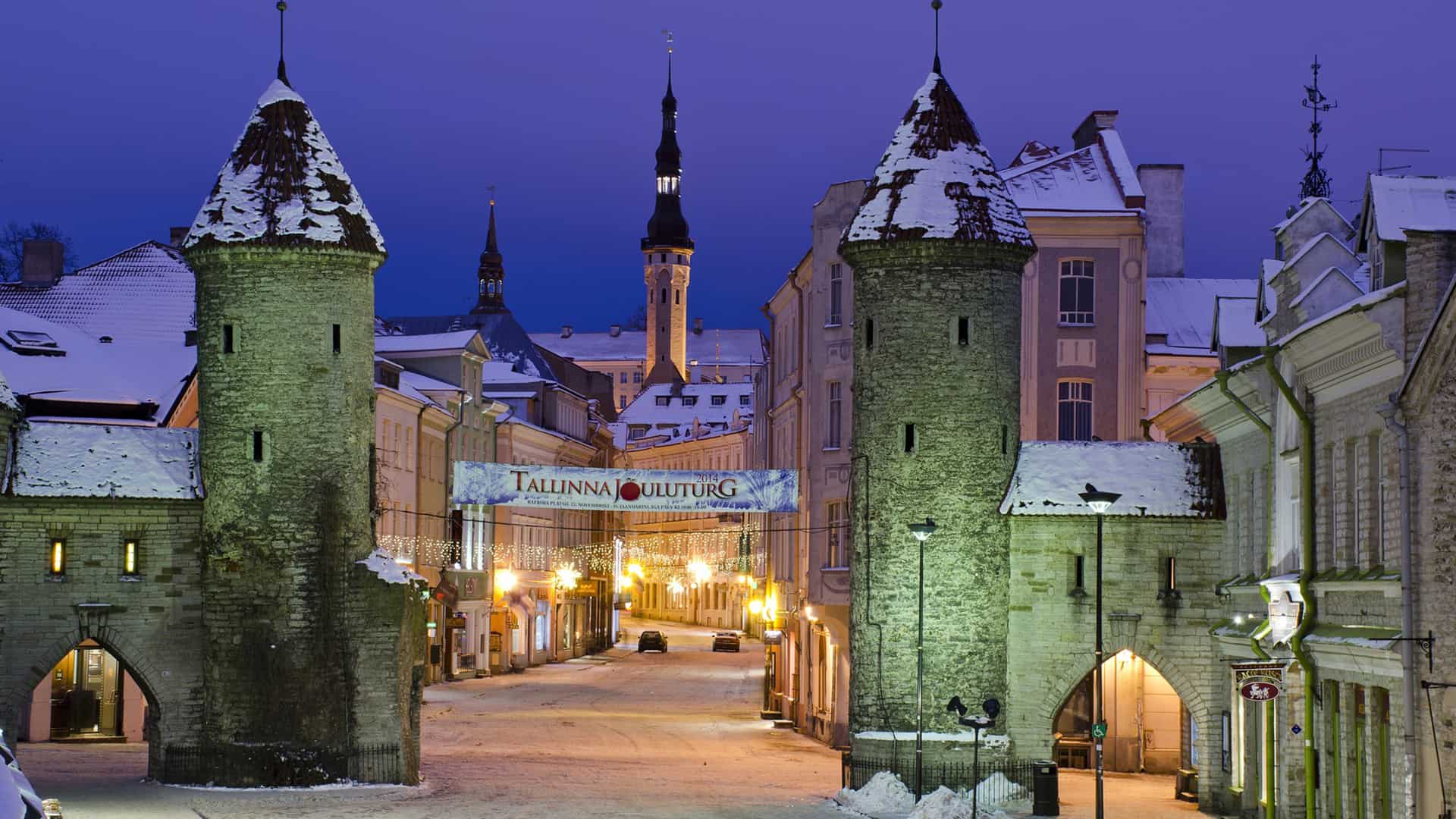
Estonia offers a study experience that can feel both international and personal. You might spend a morning discussing a business idea in Tartu, an afternoon working on a cybersecurity project in Tallinn, and a weekend discovering a coastline or forest that feels far removed from campus life.
For students who want to learn in English, the country has options across technology, business, design, the arts and other subjects. The practical questions are which course fits you, how much your particular fee category costs, and how to organise a comfortable life around your studies.
Recensito: 18 ottobre 2026. This guide uses current institution and official study information. Where a university publishes a fee without a future intake year, treat it as a current reference and obtain the figure for your own start date.
Estonia at a glance for international students
- Valuta: euro.
- Main study settings: Tallinn and Tartu, with different campus environments and everyday routines.
- English-taught options: bachelor’s and master’s degrees, including business, computing and cybersecurity.
- Tuition: varies by course and sometimes nationality; English-taught study is not automatically free.
- Planning priority: arrange tuition and living money before relying on a scholarship or part-time job.
Finding an English-taught degree
The national Study in Estonia website provides separate lists of English-taught bachelor’s programmes e master’s programmes. Use them to discover subjects, then move to the university’s own page for the curriculum, entry requirements and current intake.
At bachelor’s level, think about the foundation you want. Would you prefer a broad business education, a technical course with substantial programming, or a creative programme built around projects and a portfolio? At master’s level, the fit with your previous study becomes more important: courses with similar titles may expect very different mathematical, technical or professional preparation.
English can be the language of the degree while Estonian remains useful in daily life. Learning a few phrases, joining a language exchange and being curious about local culture can make settling in more rewarding. It can also widen the range of people and organisations you feel comfortable approaching.
Universities and course examples
University of Tartu: business and a university-city experience
Il University of Tartu’s Business Administration bachelor’s degree is taught in English in Tartu. It takes three years and carries 180 ECTS. The published tuition is €4,200 a year, and the page identifies the 2026–27 curriculum.
The course covers areas such as economics, finance, marketing and management. For a student still exploring a direction, that breadth can be useful: an interest in entrepreneurship may develop into enthusiasm for finance, analytics or people management once you have tried the work.
TalTech: learning to build and protect digital systems
TalTech’s Cyber Security Engineering bachelor’s programme is an English-taught, three-year course carrying 180 ECTS. Its curriculum includes programming, networks, databases, security specialisms and an internship. The published annual tuition is €7,000, with tuition-free study for EU/EEA citizens.
The university’s Cybersecurity master’s programme is taught in English in Tallinn over two years, with 120 ECTS. Its current fee is also €7,000 a year for the fee-paying category and free for EU/EEA citizens. The programme expects relevant prior preparation; its admissions page explains the route for applicants with an IT background or relevant work experience.
These are examples to help you compare, not a ranking. A strong course choice should connect the skills you already have with the projects and ideas you want to explore next.
Looking beyond technology
The national programme lists also include Tallinn University, the Estonian Academy of Arts, the Estonian Academy of Music and Theatre, Estonian Business School and the Estonian University of Life Sciences. Their subjects demonstrate that studying in Estonia is not limited to coding or startups.
For creative courses, look at studio time, the facilities you can use and the work students produce. For business and social sciences, explore the balance between theory, practical assignments and research. Asking a current student what a normal week looks like often gives a more useful picture than a slogan.
Tuition fees: what has changed?
Study in Estonia’s tuition guidance gives a broad bachelor’s and master’s range of €1,500–€15,000 a year, with more expensive exceptions. This range is a starting point, not a quote. Course pages are the better source for comparing the actual amount you would pay.
A particularly important change concerns the University of Tartu. Its current tuition policy says that, from 2026–27, newly admitted students from outside the EU/EEA will no longer be offered tuition-waiver places. Some programmes instead offer fee reductions. EU/EEA applicants should also check the individual programme, because availability of free places or fees varies.
That change makes old advice about applying to Estonia for a full tuition waiver unreliable. There may still be attractive funding or reductions, but they need to match your course, citizenship category and entry year.
For non-EU/EEA/Swiss applicants covered by Tartu’s prepayment rule, half of the first semester’s tuition must be paid before the official admission letter is issued. Read the invoice and refund terms before arranging the transfer. This is a cash-flow consideration: the money may be needed well before arrival.
Living costs in Tallinn and Tartu
Accommodation makes a large difference to the total. The national living-cost guide lists dormitory examples of approximately €150–€350 a month and private-flat examples of €350–€750. Availability, the room type and what is included matter more than the lowest advertised number.
Some cost pages combine current prices with older surveys, so build your own budget from an accommodation offer and realistic spending. Ask about winter utility bills, internet, deposits and whether you can stay in the same room during the summer.
An illustrative monthly budget: €400 for a room and utilities, €300 for food, €40 for transport, €25 for your phone, €50 set aside for insurance and €135 for personal spending and a reserve gives a total of €950. These are chosen planning allowances, not market averages or an official visa budget. Replace each line with your own circumstances.
At €950 a month, 12 months of living expenses comes to €11,400. Adding a €4,200 annual tuition fee gives €15,600 before travel, a housing deposit and other arrival costs. If you choose a more expensive flat or programme, the annual total rises quickly. Use our tuition and living-cost guide to compare the full first year.
Borse di studio e sostegno finanziario
Look for funding at the same time as the course. A scholarship may have an earlier deadline, a separate application or conditions about your field, nationality or progress. Fee reductions, living stipends and funded exchange places serve different purposes.
Start with the funding link on the university’s programme page and the national study portal. Then use our elenco delle borse di studio to explore further opportunities as the catalogue grows. Read an award as a budget item: how much is it worth, when is it paid, and does it continue beyond the first year?
Keep a plan that works without an unconfirmed award. That does not mean giving up on funding; it means knowing which offers you can comfortably accept when decisions arrive.
Applications and intake planning
Each institution sets its own application calendar and selection process. The Tartu Business Administration page describes an application period from 2 January to 15 April for its published cycle, followed by a late-August start. Those dates explain the pattern of that course; they should not be copied across every Estonian university or assumed to confirm an unpublished future intake.
Prepare your qualification documents, transcripts and English-language evidence. A technical course may assess mathematical or computing preparation, while an arts programme may ask for a portfolio. A master’s application may need a motivation statement, references, an interview or relevant experience.
A helpful way to compare three or four choices is to write down the modules you most want to take, the total cost, the city and the application deadline. You can then see whether the difference between two courses is academic, financial or simply a preference about how you want to live.
Student visas and residence
Estonia does use long-stay visas for study; the idea that there is no student visa route is misleading. The official student guidance explains that non-EU applicants commonly begin with a D visa and arrange a study residence permit where required for a longer stay.
EU citizens follow a different route: the guidance calls for registering their residence within three months of entry and applying for an Estonian identity card within a month of obtaining the temporary right of residence. Your university can help you understand which steps apply to your circumstances.
The Ministry of Foreign Affairs’ current D-visa guidance lists €880 a month in financial means for the applicant’s study category. That is an immigration requirement for that application, not a prediction of what your particular room and lifestyle will cost. Tuition, insurance and arrival expenses still need their own place in your plan.
Can international students work in Estonia?
Il EU Immigration Portal’s Estonia guidance says students with a study residence permit can work without a separate work permit as long as employment does not interfere with their studies. The national study portal emphasises maintaining full-time progress.
That flexibility is useful, but it does not mean a job will be available on arrival or that a full-time degree leaves unlimited time for work. Start with your timetable and workload. A relevant part-time role, a carefully chosen internship or a university project may contribute more to your development than taking the largest number of hours possible.
For eligible study residence-permit holders, the EU portal describes a period of up to 270 days after the permit expires in the specified circumstances. Use that guidance with the university’s international office when planning a transition after graduation; it is not a guarantee of a job.
Settling in and building experience
Give yourself time to settle before filling every spare hour. Arrange the first week’s accommodation, learn the route to campus, attend orientation and find the supermarket or café that fits your routine. Small practical decisions free up attention for learning.
Student organisations, project teams and events can be a good way to meet people beyond your immediate course. If you are curious about entrepreneurship, try developing an idea with classmates. If your interests are creative, look for opportunities to make and show work. Experience grows through participation, not just attendance.
Prepare for the seasonal change as well. Warm clothing, a workable daily routine and activities you enjoy indoors can make the darker months easier. Equally, leave time to enjoy the long summer evenings and explore outside the university city.
Common questions about studying in Estonia
Is studying in Estonia free for international students?
Some programmes or student categories are tuition-free, but many English-taught degrees charge fees. The university, programme, citizenship category and entry year determine the answer. Tartu’s change for new non-EU/EEA students from 2026–27 is especially relevant.
Do I need Estonian to study?
An English-taught programme has its own English admission requirements. Estonian is still useful for daily life and may broaden placement and work possibilities. Check language expectations for practical or client-facing parts of your course.
Can a part-time job pay for everything?
It is better to treat work as additional income and experience. Tuition and living costs arrive on a timetable even when finding a job takes longer than expected.
Confronta Lettonia, Finlandia and other study destinations, or start with our guide to choosing an English-taught programme.