


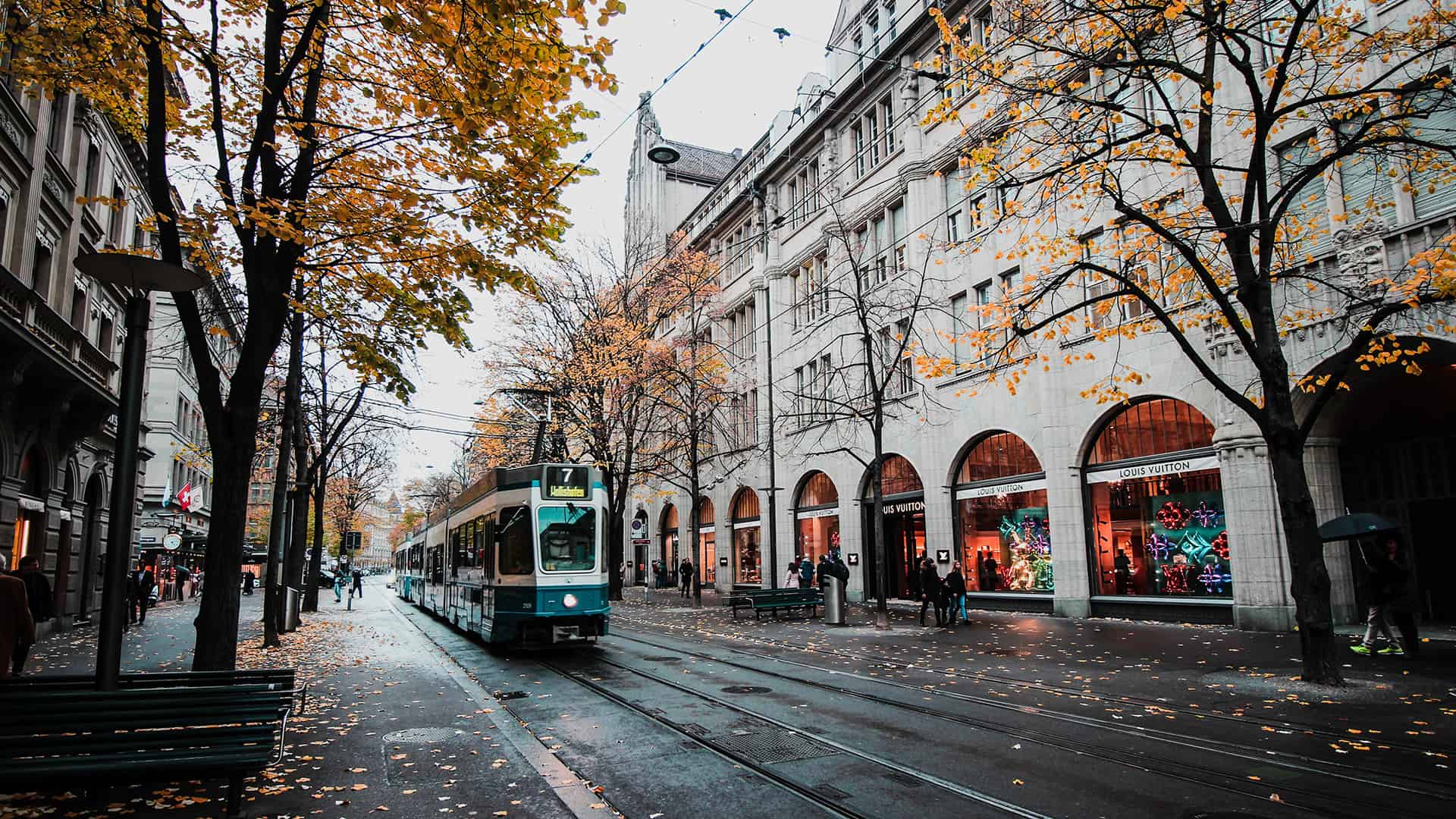
Switzerland can offer a distinctive study experience: a research project in Zurich, business classes in St. Gallen, or practical hospitality training above Lake Geneva. Its appeal is the chance to combine serious learning with an international environment and a different way of living.
For students looking for a degree taught in English, the key decisions are the course, the language of the whole programme and the total cost of living. A modest university tuition bill does not make Switzerland a low-budget destination. Equally, an English-language university website does not mean every degree is taught in English.
Anerkannt: 18. Oktober 2026. Fee examples below refer to the academic year or fee schedule stated. They are examples for planning, not a national price list.
Studying in Switzerland at a glance
- Währung: Swiss franc, usually written CHF.
- English-taught study: particularly worth exploring at master’s level, with selected bachelor’s routes in business, hospitality and other fields.
- Main budget challenge: accommodation and everyday expenses, alongside tuition.
- Good starting point: choose a subject and degree level before comparing cities or university names.
- Working while studying: possible under the relevant residence and employment conditions, but not a dependable way to fund the entire experience.
Can you study in Switzerland in English?
Yes, but the answer becomes much more useful when you separate bachelor’s and master’s study. At ETH Zurich, bachelor’s programmes begin in German; some teaching later takes place in English. That is a different proposition from enrolling on an English-taught degree from the first semester.
At master’s level, ETH says most programmes are taught in English, while others require German or both languages. Explore the language requirements alongside the subjects you will study. This is especially helpful if you are comparing engineering, computing or scientific specialisations.
English-taught undergraduate options also exist. The University of St. Gallen offers its Assessment Year in Economic Sciences in English or German. The subsequent Business Administration major lists German and English, so look at the course choices and language mix across the full degree. A route with some English modules is not automatically an entirely English-only experience.
For everyday life, learning the language of your chosen region is a useful investment. It can make a shared flat, a student club or a local placement feel much more accessible. You do not have to become fluent before enjoying Switzerland, but a little regular practice will add a great deal to your time there.
Universities, business schools and hospitality study
Start with the kind of learning you enjoy. A research-led master’s degree, a broad undergraduate business education and an intensive hospitality programme can all be valuable, but their daily routines are very different.
Research and specialist study
ETH Zurich is one example for students exploring science, technology and related master’s subjects in English. Look beyond the course title: the available laboratories, project work, elective modules and thesis opportunities will tell you more about what you can actually learn.
Switzerland’s university landscape also includes EPFL and the universities of Basel, Bern, Geneva, Lausanne, Zurich and other cities. The swissuniversities overview provides a useful starting point for comparing public university fees and finding each institution’s own information. Language and entry requirements still belong to the particular course.
Geschäft und Management
Die University of St. Gallen’s Business Administration bachelor’s route normally takes three years, including the Assessment Year, and carries 180 ECTS. Its value for a prospective student lies in the curriculum and opportunities to explore business questions, rather than simply the name on the application.
When comparing business schools, think about the work you want to do during the degree. Would you enjoy building a venture, analysing markets, working on a company project or developing management skills? Ask for examples of recent student projects and the support available for internships. These make the learning experience easier to picture.
Hospitality and practical learning
EHL’s Bachelor in International Hospitality Management offers an English-taught route at Lausanne. Its published structure takes four years including the preparatory year, with practical workshops and two six-month internships. This illustrates how a hospitality programme can combine business education with substantial experience beyond the classroom.
With residential or practice-intensive programmes, compare the complete package: tuition, accommodation, meals, equipment, uniforms and the costs of moving for internships. Our hospitality schools in Switzerland guide can help you explore the sector; use each school’s current course and fee pages for your final shortlist.
Tuition fees in Switzerland
There is no single international student fee. The 2026–27 swissuniversities fee overview shows considerable variation. Its semester examples include CHF 850 tuition at Basel, CHF 435 plus CHF 65 in compulsory fees at Geneva, and CHF 500 plus CHF 80 at Lausanne. These figures concern the listed university degrees, not every specialist or continuing-education course.
ETH Zurich now distinguishes two tuition groups: CHF 730 or CHF 2,190 per semester. The higher rate applies to students who do not meet the lower-fee criteria. The distinction has applied since autumn 2025, with transitional arrangements. Nationality alone does not explain every case: prior residence, schooling and particular permit circumstances can matter.
For comparison, St. Gallen’s Business Administration page lists CHF 3,343.50 per semester for foreign nationals, including its compulsory semester charges. Private institutions and specialised professional programmes set their own fees. Comparing a public university semester price with a private school’s annual residential package will give a misleading result.
Build your comparison around the amount payable for the full academic year, then add application charges and any compulsory extras. If you expect to change currency, leave room for exchange-rate movements rather than converting one year’s costs at a single optimistic rate.
Living costs and a realistic student budget
Die University of Zurich’s student finance guidance recommends having at least CHF 2,200 per month available. Its example includes a study-cost allowance as well as housing, food, transport, insurance and personal expenses. It also notes that international students may face additional costs.
Use that as a local planning reference, not a promise that every student can live on exactly that amount. A room already secured in student accommodation creates a different budget from finding a private apartment after arrival. The rent, deposit and insurance quote are the figures to settle first.
Illustrative first-year calculation: if you set aside CHF 2,300 a month for living expenses excluding tuition, 12 months comes to CHF 27,600. Adding two CHF 2,190 tuition payments brings the subtotal to CHF 31,980. Compulsory university charges, travel, a housing deposit and other arrival costs still need to be added. This is an example calculation using a chosen living allowance, not an official minimum or a quote for a particular student.
- Ask whether rent includes heating, electricity and internet.
- Budget for the whole housing contract, including any months after teaching finishes.
- Get insurance advice for your own residence and employment circumstances.
- Keep arrival money accessible: deposits and initial fees can fall due before your normal monthly routine begins.
- Allow some money for friendship and enjoyment, whether that means a club, a shared meal or a weekend away.
Scholarships and funding
Look at university and programme funding early. Scholarships may support tuition, living costs or a particular research project; the same word does not always describe the same benefit. A partial fee award can still be worthwhile, provided the remaining budget works.
Die Swiss Government Excellence Scholarships for 2027–28 primarily target postgraduate researchers who have already completed a master’s degree. There is also an arts route for an initial master’s degree, available to applicants from a limited group of countries. These are not a general funding scheme for every undergraduate or taught business master’s applicant.
The 2027–28 application round opened on 20 August 2026, with availability and deadlines depending on the applicant’s country. Use the relevant country information to plan. Research applicants should also allow time to develop their project with a potential supervisor.
Explore our growing Stipendienverzeichnis alongside the university’s own funding pages. For your budget, count funding as secured when you have the award, its amount and its payment schedule.
Applications and choosing an intake
A good application begins with a good match. For a bachelor’s degree, compare your school subjects and results with the course’s requirements. For a master’s degree, look at the subject background expected and how your previous modules or experience connect with the proposed study.
Prepare transcripts, the relevant qualification documents, language evidence and any requested motivation statement or portfolio. Different universities use different selection methods. Some courses assess subject preparation closely; others also use interviews, tests or professional experience.
If you are planning ahead from autumn 2026, look specifically for the next published intake. A page describing the current academic year is useful for understanding costs, but it does not by itself confirm a future application deadline. Work backwards from the start date, leaving time for funding, accommodation and entry arrangements.
Visas, residence and arrival
Die Swiss foreign affairs guidance separates university admission from permission to live in Switzerland. EU/EFTA students must register locally and apply for the relevant residence permission within 14 days of arrival. Other applicants should use the Swiss representation responsible for their country of residence to establish the appropriate visa process.
Your university’s international office is a useful partner here. Ask about the local registration process, accommodation evidence, insurance and financial documents after you receive your offer. Organising these steps early leaves more space to enjoy the move.
Part-time work, internships and opportunities
Part-time work can provide experience, contacts and some income, but the first-year plan should work without assuming you will immediately find a job. Your language skills, subject, timetable and location all influence the opportunities available.
ETH’s guidance for non-EU/EFTA students explains the usual maximum of 15 hours a week during the semester and the need for an employer-arranged permit. A six-month waiting period generally applies, with specified exceptions such as certain master’s work within an ETH department. EU/EFTA students should follow the relevant cantonal guidance; Geneva’s student-permit information also describes a 15-hour limit for ancillary work.
Internships are most useful when they connect with what you want to learn. Discuss the tasks, supervision, location, pay and timing with the school and employer. A placement that lets you contribute to a real project can be valuable even when it changes your mind about your eventual career.
Making the most of student life
Compare more than a campus photograph. Look at the journey from affordable housing to your actual teaching building, the language around you and the activities you would realistically join. Zurich, Lausanne, Geneva and St. Gallen offer different settings; the right choice is the place where your course and daily life fit together.
Join something early: a sports group, a student enterprise, a language exchange or a society connected with your interests. Familiar faces make settling in easier. Keep some flexibility in your plans, too. New interests, unexpected friendships and the experience of managing life abroad are part of the education.
Common questions about studying in Switzerland
Is university in Switzerland free?
Usually not. Public university tuition can be lower than in some other destinations, but rates vary and living expenses remain a major part of the budget. Some international students now pay substantially more than the old CHF 730 ETH semester rate.
Can I take a bachelor’s degree entirely in English?
There are English-taught options, including hospitality and selected business routes. Choose by the full programme language. ETH’s bachelor’s degrees begin in German, so they are not a general English-only undergraduate route.
Should I choose a university by its ranking?
A ranking can introduce you to names, but it cannot choose your experience. The subjects, projects, teaching approach, people, location and total cost are more useful for deciding where you will learn well.
Folgen Sie unseren Anleitungen finding English-taught programmes und planning tuition and living costs, or compare other study destinations.