


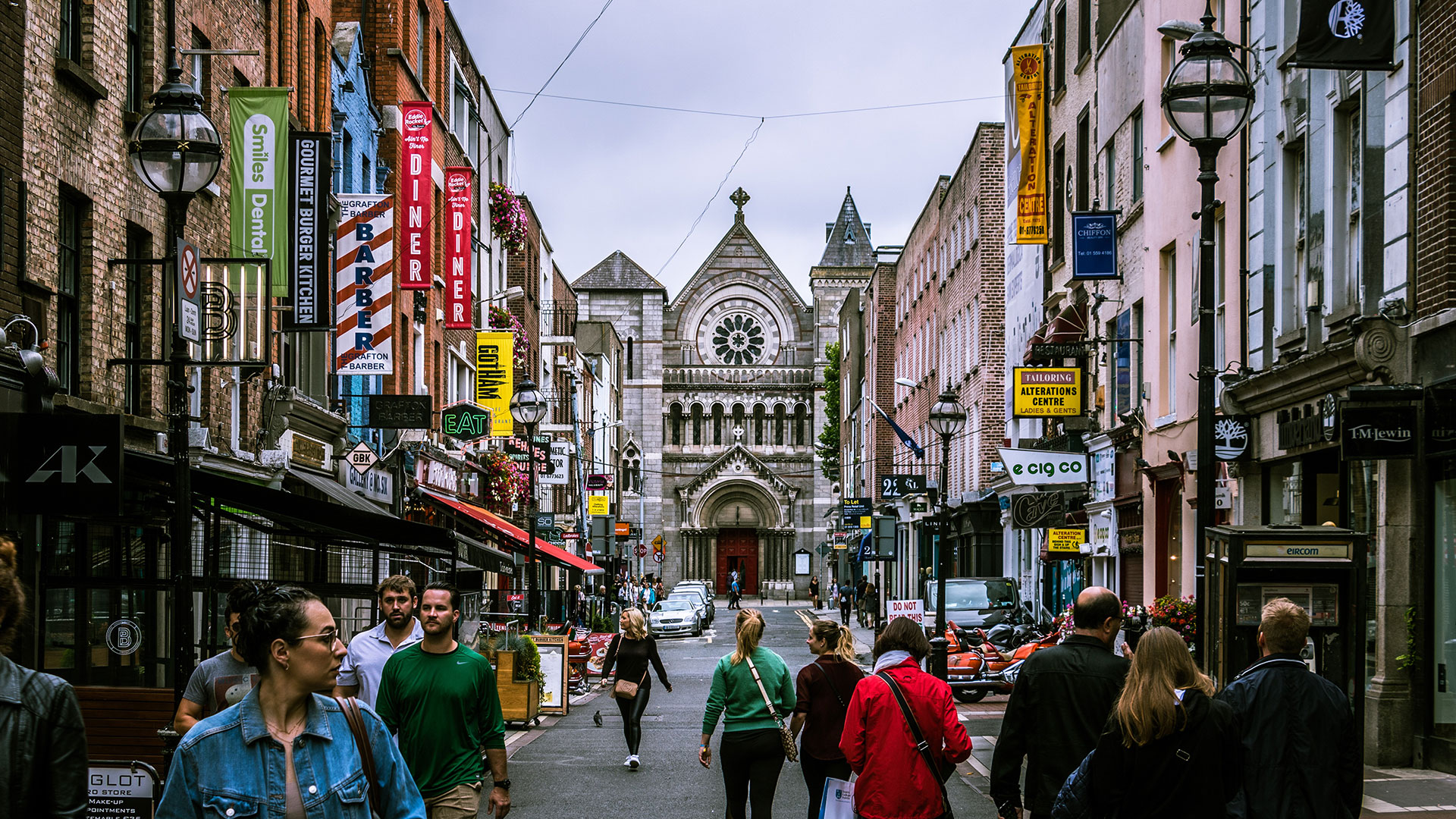
Studying in Ireland can bring together an English-speaking learning environment, an international classroom and the chance to develop your interests through projects, research and everyday experience. The best place for you depends on the course and the life you want around it.
This guide covers the Republic of Ireland. It explains how to compare undergraduate and postgraduate options, understand fee categories, plan accommodation and approach the practical steps before arrival. Housing and the complete cost of your stay deserve as much attention as the tuition figure.
Reviewed: 18 October 2026. Fee examples identify their academic year. For later intakes, follow the linked official pages as new rates and application calendars are published.
Featured programmes in Ireland
Our first Irish listing is the Business Analytics MSc at the University of Galway. It is a one-year, full-time course on campus, worth 90 ECTS, with a substantial applied analytics project.
The course offers a way to explore how data can improve business decisions. It may appeal to someone who enjoys working with numbers and wants to become better at explaining what they mean. The profile brings together the learning experience, admissions, intake and published fees.
Meet the University of Galway through its institution profile, or browse our featured programmes in Ireland. This is a growing selection, with official links to help you continue your research.
Universities and Courses in Ireland
Start by comparing what you will actually study and how you will learn it. A course with projects, a placement or laboratory work can feel very different from one built around reading, seminars and independent research. Both can be rewarding; the useful question is which experience fits your interests.
O Education in Ireland planning portal brings together course-planning, admissions and accommodation information. Use each institution’s own course page to compare subjects, duration, teaching format and the campus.
For a bachelor’s, look at the progression from the first year into specialisms and any placement options. For a master’s, examine the level of prior knowledge expected and how the final project works. A one-year degree can be an attractive route, but make room in your plan for the full period of study, including any summer project.
Studying in English
Choose the course first, then check its accepted English evidence and any exemptions. There is no single score that applies to every programme. Galway’s Business Analytics MSc, for example, publishes IELTS 6.5 overall with at least 6.0 in each component, or equivalent, where evidence is required.
Language preparation can also make the experience more enjoyable. Practise discussing your subject, explaining a project and asking questions, as well as preparing for any test. Those everyday academic conversations are part of learning in an international classroom.
How to apply
The route depends on the course and your applicant category. Many undergraduate applications use CAO; other international applications and postgraduate courses may use the institution’s own portal. Trinity’s CAO guidance illustrates how fee status can affect the route.
Follow your chosen institution’s instructions and calendar. Prepare transcripts, any language evidence and the requested statement or references. If you receive a conditional offer, identify what remains to complete and when. Check deposit and refund terms before paying.
Propinas na Irlanda
There is no single international-student price. Fees depend on the programme, institution, study level and your assessed category. Compare the amount for the academic year you intend to enter, rather than assuming an older fee still applies.
Undergraduate fees and the Free Fees Initiative
Ireland’s Free Fees Initiative pays tuition for eligible students on approved full-time undergraduate courses. Eligibility includes residence, nationality or status, and previous-study conditions; an EU passport alone does not settle the question. The institution assesses your eligibility.
Eligible students can still have a student contribution and other charges to pay. The government’s 2026/27 funding announcement confirms the standard contribution reduction to €2,500, with grants potentially reducing what eligible students pay. This undergraduate arrangement should not be applied to a postgraduate course.
A postgraduate fee example
For 2027/28, the University of Galway’s Business Analytics MSc publishes total fees of €12,150 in the EU category e €22,250 in the non-EU category. Each total includes a €150 levy. These are course-specific figures, with living costs additional.
Ask the institution to confirm your fee category and the payment schedule. Then record tuition, levies, deposits and any additional course costs separately. Our tuition fees guide helps you turn those figures into a complete comparison.
Bolsas de estudo na Irlanda
Check the awards offered by your chosen institution, including scholarships attached to a particular school or course. Compare eligibility, the award value, the number of years covered and whether a separate application is required.
O Government of Ireland International Education Scholarship supports eligible international students at postgraduate levels. Its 2026 scheme offered a €10,000 stipend and a full fee waiver for one year. The 2026 call is closed; use the HEA page for the next published call rather than assuming the previous deadline still applies.
A scholarship can make a major difference, but plan the timing as well as the amount. If an award is paid after arrival, you may still need money for accommodation and travel before receiving it. Keep unconfirmed awards outside the budget you rely on to accept an offer.
Custo de vida na Irlanda
Your rent is likely to be one of the biggest decisions in the budget. Compare actual accommodation offers near your campus, the dates they cover and what is included. A national average cannot tell you whether a suitable room is available when you need it.
As a local reference, the University of Galway accommodation service currently quotes around €700–€1,200 per month for a single room in a shared private house, with bills needing clarification. This is a Galway example, not an Ireland-wide rent estimate.
Build a budget from your own choices
Start with rent, then add utilities, food, transport, insurance, phone costs, study materials and personal spending. Include a reserve for the things that are easy to forget, such as replacing a laptop, travelling home or needing temporary accommodation.
Illustrative monthly budget: €900 rent, €100 utilities and internet, €300 groceries, €70 local transport, €30 phone, €50 provision for insurance, €100 personal spending and €100 contingency total €1,650 per month. These are planning assumptions, not market averages or insurance quotations. Replace each amount with your own evidence.
At that illustrative level, twelve months means €19,800 in living expenses before tuition and arrival costs. Insurance may need to be paid annually, and a rental deposit is an upfront cash requirement even if it is refundable later. Do not count bills or meals twice if accommodation already includes them.
Accommodation and arrival
Ask the university’s accommodation service about residences, private rooms and homestays, including availability and application dates. Check the commute and contract period as carefully as the room itself. If your course includes a summer project, make sure your housing arrangement covers that period or budget for a move.
Keep funds available for the deposit, travel and initial purchases. Before paying an unfamiliar housing provider, use the university’s guidance to verify the offer and understand the terms. Having a place to settle into makes it much easier to focus on meeting people and starting your studies.
Estágios e colocações em empresas na Irlanda
A placement can be a valuable part of studying abroad, but its availability and format depend on the course. Some programmes include a placement; others offer an applied project, employer-led assignment or research experience.
Ask what you will do, how the work is supervised and how students find hosts. Clarify whether it is paid, whether you may need to move and how it fits the academic calendar. A project involving business data is not necessarily an internship with an employer.
If you hold student immigration permission, ask the university how the particular placement fits its conditions before starting. A course-integrated placement and an unrelated casual job should not be assumed to follow identical arrangements.
Think about the skills you want to practise. Learning to explain your ideas, respond to feedback and work reliably with others can be just as useful as becoming comfortable with a new technical tool.
Trabalhar na Irlanda
Students with valid Stamp 2 permission can work up to 20 hours a week during the usual study period. The allowance rises to 40 hours a week during June, July, August and September, and from 15 December to 15 January. These are the periods listed by Immigration Service Delivery, rather than any holiday a course happens to schedule.
These limits concern that immigration category. EU/EEA, Swiss and British students have different rights, and other permission types can have different conditions.
A part-time job can bring experience and extra income, but plan to fund your essential costs without it. Immigration guidance explicitly requires students to be able to support themselves without relying on casual work. Finding a role also takes time, and shifts need to fit around study.
After graduation
Under the Third Level Graduate Programme, eligible graduates with a Level 8 award can receive twelve months of permission. Eligible Level 9 or higher graduates can receive up to twenty-four months, issued initially for twelve months with conditions for renewal.
This gives qualifying graduates time to pursue opportunities. Start developing your experience while studying through projects, university activities and professional contacts, and keep examples that help you explain what you can contribute.
Visas and Immigration for Studying in Ireland
EU/EEA and Swiss citizens generally do not need an Irish study visa or student immigration permission. British citizens have rights under the Common Travel Area. Other applicants should use the official study guidance to establish whether they need a visa before travel. Being visa-exempt does not necessarily remove the need to register a longer stay.
For students who need immigration registration, the official student FAQs explain the process, the €300 registration fee and private medical insurance requirements. Your institution can help you organise the sequence from acceptance to arrival.
Evidence of funds
O financial rules effective from 30 June 2025 require access to €10,000 for a one-year course, with the required evidence assessed at the relevant visa or registration stage. Visa applicants must also demonstrate ready access to the same level of funding for subsequent years, alongside course fees. Shorter stays have different amounts.
This immigration figure is not a promise that €10,000 will cover your actual year. Build a separate spending plan using the housing you can secure and the length of your stay.
Planning a rewarding year
Once you have a realistic budget and a course you are excited about, think about how you want to use the experience. Join activities beyond your subject, make space for friendships and ask for support early if something is unfamiliar.
Compare our guides to Alemanha, the Netherlands e Espanha, or continue through the programme directory.